


Stage 3: Burying your Pre-Compost (Fermented Food Waste)
Updated: Aug 16, 2020
We rehabilitate farms degraded through decades of bombarding it with synthetic fertilizers and pesticides/herbicides. We do this, by bridging donors of Fermented Food Waste (FFW) to Soil Sites in urban gardens and in rural farms. But we still have a long way to go. Logistics is a major problem.

Burying your Pre-compost (Fermented Food Waste) helps to save the environment in 2 ways.
First, by diverting food waste away from the landfills and second, through carbon farming. Carbon farming is a method of sequestering carbon from the atmosphere and storing it into the soil. Traditional composting (open pit), allows you to sequester carbon dioxide by as much as 50%, via a bokashi method which includes burying the food waste in soil, it allows you to sequester carbon dioxide by as much as 95%. Too much carbon in the atmosphere causes Climate change, storing it into the soil - helps to rehabilitate the soil and also to fertilize our plants and trees.
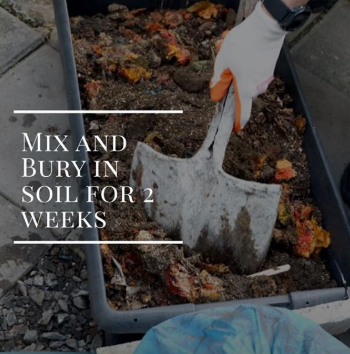
Once you have finished the 2 weeks fermentation period, where you do not open your Balde, the contents of your balde will now be called Pre-compost of Fermented Food Waste (FFW). It will not look like soil yet. If anything, it will look like atchara or kimchi or sauerkraut.
This part is no longer anaerobic, in fact, its quite the opposite - the process is aerobic - meaning we have to introduce oxygen. We also need to ensure it gets some sunlight and air. So, Air, Sunlight and Moisture.

To help you make the decision - watch this video
The most common stage 3 methods are the following - click the link for further details 1. Trench Method
2. Eazy box Method 3. Raised Bed Method
4. Bokzbox method If you signed up for Live Mentoring - please attend the live Q&A Session. If you signed up for the self-paced mentoring - please log your questions in the forum or just view this recorded Get ready with me - Stage 3 Q&A.



Comments