


MYTH BUSTER : AIR TIGHT Bokashi Buckets
MYTH: We also tried double-stacked buckets a few years ago, and another problem we had with them was that they weren't as airtight.

In the past, I take pride that everyone in the Bokashi industry " help " and build each other up. However, recently I have seen an influx of questions and complaints from the public - asking for confirmation whether our double bucket systems are "air tight". Well, it is TRUE that it is not as "air tight" - the myth though is that " It is a problem".
So, I always ask - what does "air tight " mean? At least from the context of Bokashi fermentation - how air tight should your bucket be? And the answer is no different from what you will get from people who are experts in fermentation whether they ferment kimchi, achara, beer, wine , sauerkraut or KOMBUCHA.


BUSTED: A container need not be 100% Air Tight to achieve Anaerobic Fermentation.
Proper fermenting (at least from a Bokashi perspective) requires that the following criteria be met:
That your food waste need to be under the fermenting catalyst - in our case it is the bokashi Ipa.
In fact, proper fermenting necessarily PROHIBITS a 100% airtight environment. If it were airtight, gasses could not escape.

And what happens - when gasses could not escape? Your bucket will become bloated - if it were glass - it would EXPLODE.
Source of information : http://fermentacap.com/myths-about-airtight-fermenting/

That is also the reason why we ask you to COMPRESS! COMPRESS! COMPRESS! - to push the air out!
Even closed fermenting REQUIRES that the foods stay under the brine in order for them to properly ferment. If various manufacturer claims about fermenting requiring an airtight environment were true, then it would not matter whether the food was under the brine or not – the microbes could not survive either IN OR OUT of the brine, so there would be no need to sell such things as Dunkers and to give elaborate instructions on keeping food under the brine, nor to insist repeatedly that it do so. The system, being a system, simply provides people with a step by step which they feel obligated to adhere to.
In the same wavelength if all claims about fermenting requiring a 100% airtight environment were true, then it would not matter whether the food waste is treated with bokashi bran or not - " just buy a super airtight bucket" and do not buy bokashi bran anymore.
Moreso, there are so many DIY Tutorials in youtube - recommending the double bucket system as well - and it does not include any instructions as to how to make it "air tight" than it is supposed to be.
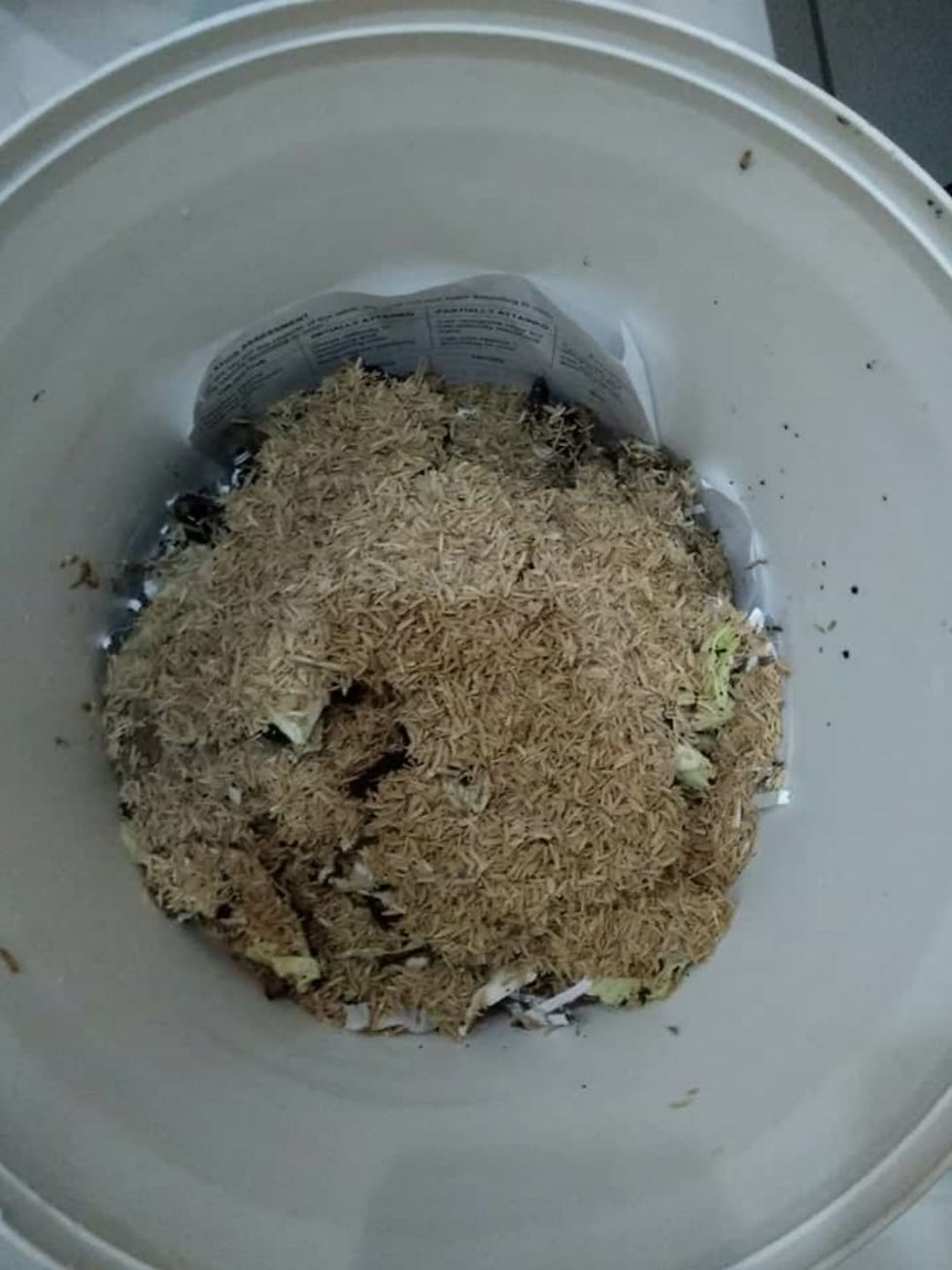
and dang! look at this picture - is there no air between the last layer of food waste and the lid? Even with their so called "super air tight buckets" there is still air between that last layer - and the lid - unless you have a vacuum sealer like this. Granted, we do compress the contents to remove air pockets (Under the bokashi bran) - not above it. Hence do not forget covering it with paper!

So, in fact, they are making false claims- that their bucket is completely airtight. Because that is completely impossible - unless they have a vacuum sealer specifically designed for their bucket as well.
So, what do we do now? Well, just remember what your Lola, Tita, Auntie, Nanay used to do when making achara or anything fermented. They put a piece of cloth over the mouth of the jar or ensure that the food being fermented is covered in brine or olive oil - before putting the lid on.
Doing this to yourself and your family is, completely unnecessary.
Whatever you do to your tubs - applies to your buckets as well. Oh di ba? Parang Mason Jar lang? Do not overcomplicate things. Trust the wisdom of our mothers and grandmothers. Remember, the bokashi is balde is just for pickling or fermenting or making kimchi/achara out of your food waste. It is not rocket science. Don't aim for 100% tight - cause that would just cause bloating, red hands or worse an explosion.
So, what is the deal, with having 2 buckets? On Day 3 onwards, your food waste will start to produce leachate - and that leachate have to be drained consistently - so the bottom bucket is the catch bucket. Read more about Bokashi Leachate here.
Having that space between the bottom and top bucket also helps with air release. So, to solve the issue about bloating - all you need to do is FART - I mean release air - by opening that faucet.
Oh, and by the way - REPURPOSED is not RECYCLED. Recycling still requires additional energy.

Being repurposed, we have mentioned in our terms and conditions that these buckets may have permanent markings and dents - and might have a loose-fitting lid. Having said that, all this conditions is not a "problem" at all - and the instructions we are giving our customers to have a properly fermented bokashi is NOT a workaround for the double bucket or loose fitting lid - it is just what needs to be done for a proper ANAEROBIC fermentation without the risk of bloating and explosions. Those are things that every Bokash seller should teach their customers regardless if they have a single bucket or double bucket system.



Comments